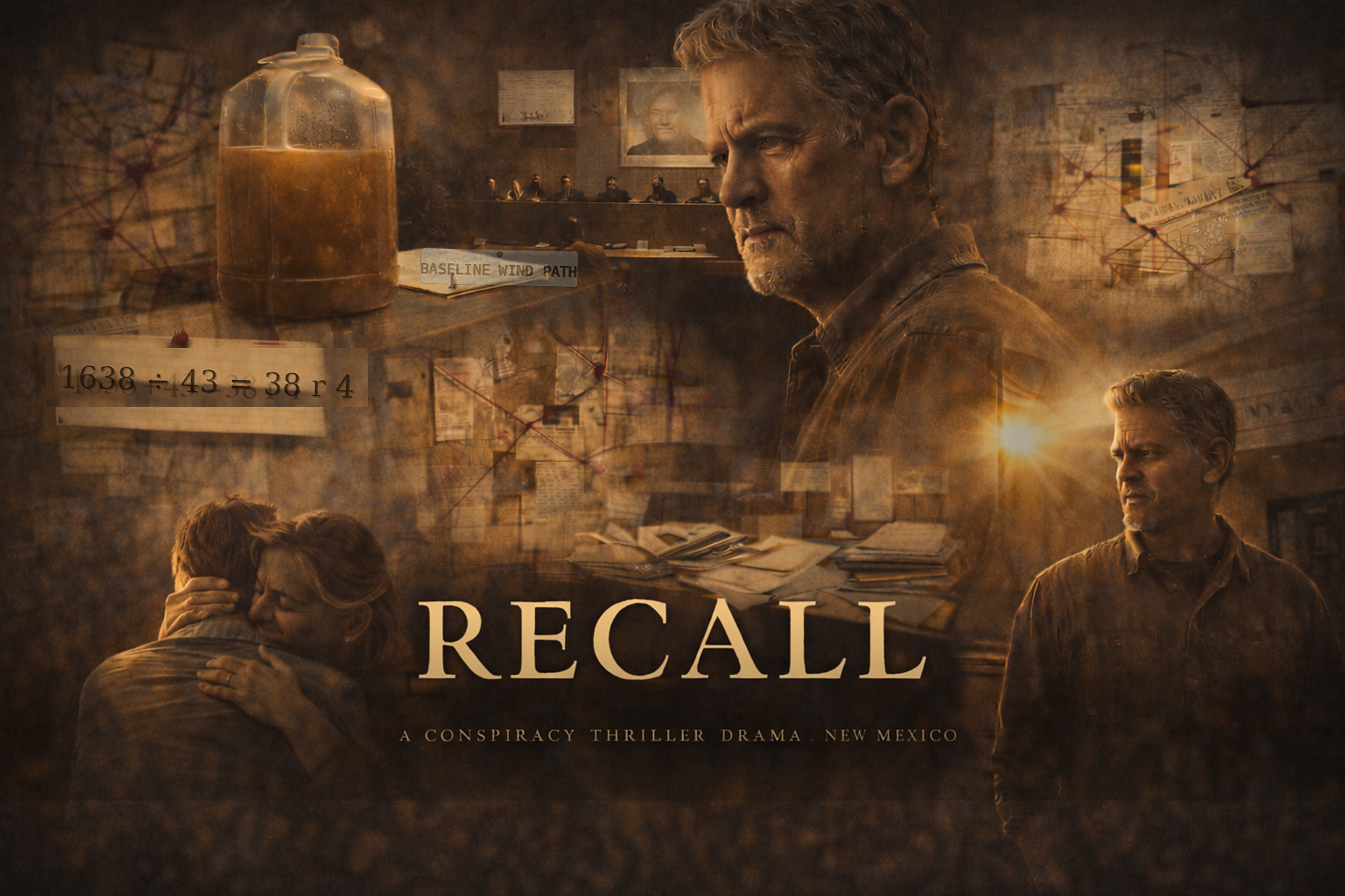
6
Script
This is a screenplay pitch for industry professionals. The site contains confidential production materials including the complete screenplay, budget, and strategic documents.
Sign the confidentiality agreement below to unlock full access. Once signed, all floors and downloads will be available. A copy of your executed agreement will appear on screen for your records and will also be emailed to you.
⚠️ Please read the entire agreement below. You must scroll to the bottom to enable the confirmation checkbox. After signing, a verification code will be sent to your email to complete the process.
NON-DISCLOSURE AGREEMENT
This Agreement is entered into as of the date of electronic signature below, between Pattern Films, a general partnership organized under the laws of Massachusetts ("Discloser"), and the undersigned individual or entity ("Recipient").
1. Definition of Confidential Information
"Confidential Information" means all non-public information disclosed by Discloser to Recipient, including but not limited to: the screenplay titled "RECALL" (WGA Registration #2149866); all treatments, synopses, character descriptions, and story materials; production budgets, financing structures, and business plans; visual materials, concept art, and production designs; festival and distribution strategies; and any other materials accessed through this website.
2. Obligations of Recipient
Recipient agrees to: (a) hold all Confidential Information in strict confidence; (b) not disclose Confidential Information to any third party without prior written consent of Discloser; (c) not use Confidential Information for any purpose other than evaluating a potential business relationship with Discloser; (d) not copy, reproduce, or distribute Confidential Information except as necessary for evaluation purposes; (e) limit access to Confidential Information to those employees or agents who have a need to know and who are bound by confidentiality obligations at least as restrictive as those herein.
3. Intellectual Property
All Confidential Information remains the exclusive property of Discloser. This Agreement grants no license, ownership interest, or rights of any kind in the Confidential Information, including without limitation any intellectual property rights, copyrights, trademarks, or trade secrets.
4. Return of Materials
Upon request by Discloser, or upon termination of discussions between the parties, Recipient shall promptly return or destroy all Confidential Information and any copies thereof, and shall certify such return or destruction in writing upon request.
5. Remedies
Recipient acknowledges that any breach of this Agreement may cause irreparable harm to Discloser for which monetary damages would be inadequate. Accordingly, Discloser shall be entitled to seek equitable relief, including injunction and specific performance, in addition to any other remedies available at law or in equity.
6. Term
The obligations of confidentiality and non-use shall survive for a period of three (3) years from the date of disclosure, or until such time as the Confidential Information becomes publicly available through no fault of Recipient.
7. Governing Law
This Agreement shall be governed by and construed in accordance with the laws of the Commonwealth of Massachusetts, without regard to its conflicts of law principles. Any dispute arising under this Agreement shall be subject to the exclusive jurisdiction of the state and federal courts located in Massachusetts.
8. Electronic Signature
The parties agree that this Agreement may be executed electronically, and that electronic signatures shall have the same legal effect as original signatures under the Electronic Signatures in Global and National Commerce Act (E-SIGN Act), 15 U.S.C. § 7001 et seq.
BY SIGNING BELOW, RECIPIENT ACKNOWLEDGES THAT THEY HAVE READ THIS AGREEMENT, UNDERSTAND ITS TERMS, AND AGREE TO BE LEGALLY BOUND BY ITS PROVISIONS.
↓ Scroll down to read the entire agreement ↓
The Story
Gil Padilla's mother Rosa was three years old when the Trinity bomb went off sixty miles from her home. Nobody told her family to evacuate. She grew up, got sick, and spent twenty years trying to get the government to acknowledge what it did to her. Four times she applied for compensation. Four times she was denied. She died filling out her fifth application. Her case number was 1638.
Gil inherited her case file and her obsession. He ran a podcast about government cover-ups that went viral—and destroyed his family. His daughter Destiny stopped speaking to him. Now he lives alone in a trailer, walls covered with documents and red string, convinced that patterns hide everywhere.
When a freak thunderstorm suppresses turnout in a special election, Gil wins the mayorship of Aguaverde, New Mexico with 43 votes. On his first day, he requests water quality records. What he finds is a twelve-year paper trail: $180,000 in payments to Rayborn Energy for repairs no one can verify were completed. And Rayborn's real business is injection wells—triggering earthquakes and leaking radioactive isotopes into the aquifer.
The conspiracy is real. The film asks a harder question: Can Gil prove it without becoming the person everyone already thinks he is? And what happens when his daughter starts seeing what he sees?
The Characters
The Mayor · 50s
A conspiracy podcaster who won with 43 votes. He's not crazy. He's grieving in a way that looks like madness. The pattern isn't paranoia—it's the shape of his mother's death.
Gil's Daughter · Late 20s
A clinic nurse who changed her last name. She comes back because home is home, even when home is complicated. By the end, she can't go home either.
Council President · 50s
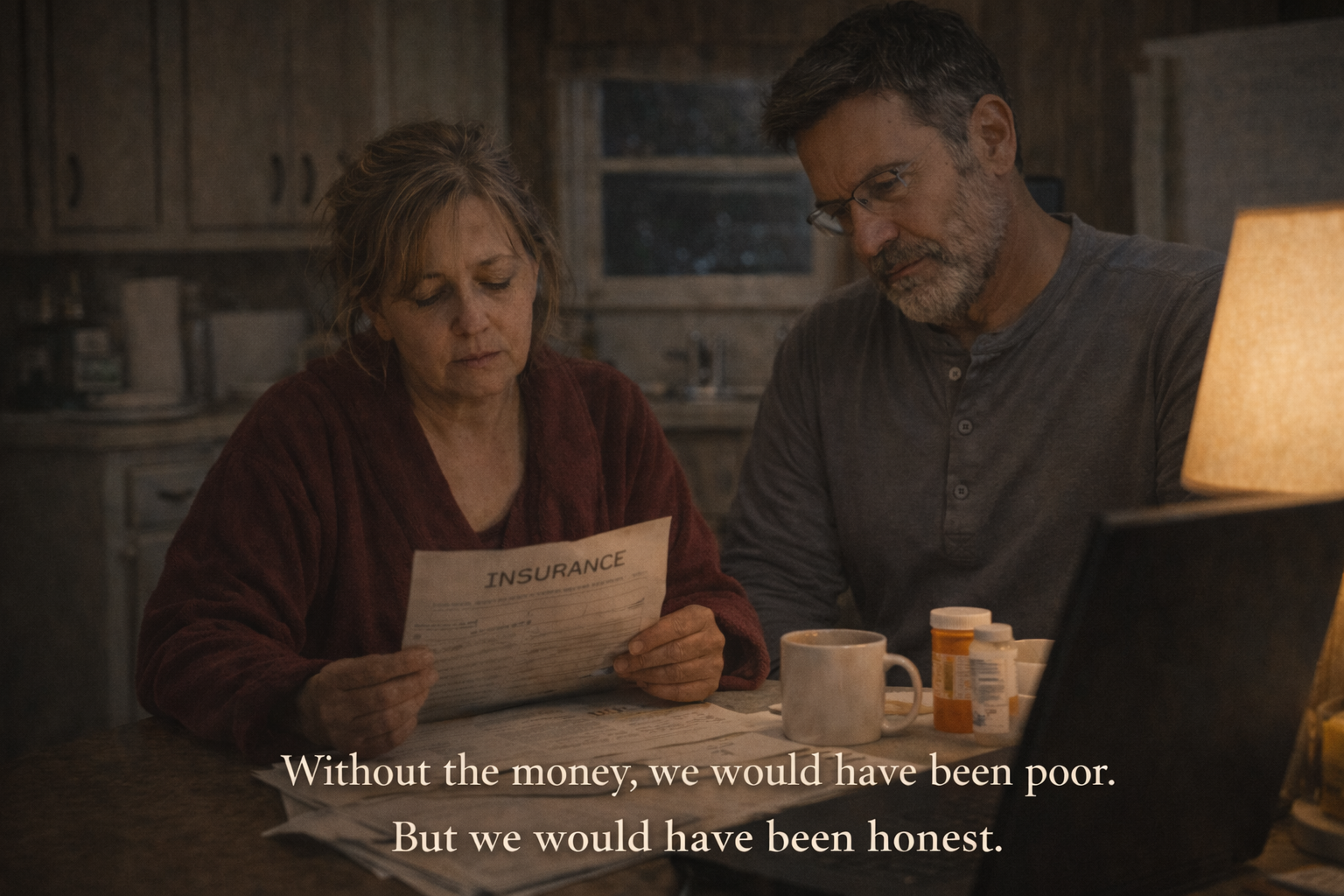
Not a villain. His wife is dying; Rayborn's insurance pays for her treatment. "I'm not a bad man. I'm a man who made a choice."
Oak Street Resident · 50s
Her basement crack runs floor to ceiling. She's tired of being polite. She wants someone to look. The jug of brown water is hers.
Deep Dive
The screenplay, structured for quick RECALL—story beats with Director's Intent callouts.
Five minutes. Three acts. One transmission.
Reviewing a screenplay takes time. Might we suggest a Mesa Swirl™?
Desert Freeze™ — Aguaverde's favorite since 1974
Desert Freeze™ and Mesa Swirl™ are fictional brands created for the world of RECALL.
Visual Modes: Mode A — Obsession + Mode B — Institutional. Two incompatible realities: Gil's focused darkness versus the town's flat fluorescent indifference. The audience is trained to look the way Gil looks—slowly, deliberately, for what's hiding in plain sight.
Darkness. A lamp clicks on. Gil's trailer becomes a study: an altar of paperwork. The wall isn't "movie crazy"—it's organized grief made visible: forms, clippings, permits, and dates, all orbiting one number.
At the center: Rosa Elena Padilla's denial letter—CASE #1638—framed under cracked glass. On a shelf: a Geiger counter labeled ROSA. Gil touches the fracture like a wound. He measures the baseline with a worn ruler, writes "16.38 miles," and starts an equation he can't finish yet: 1638 ÷ 43 =
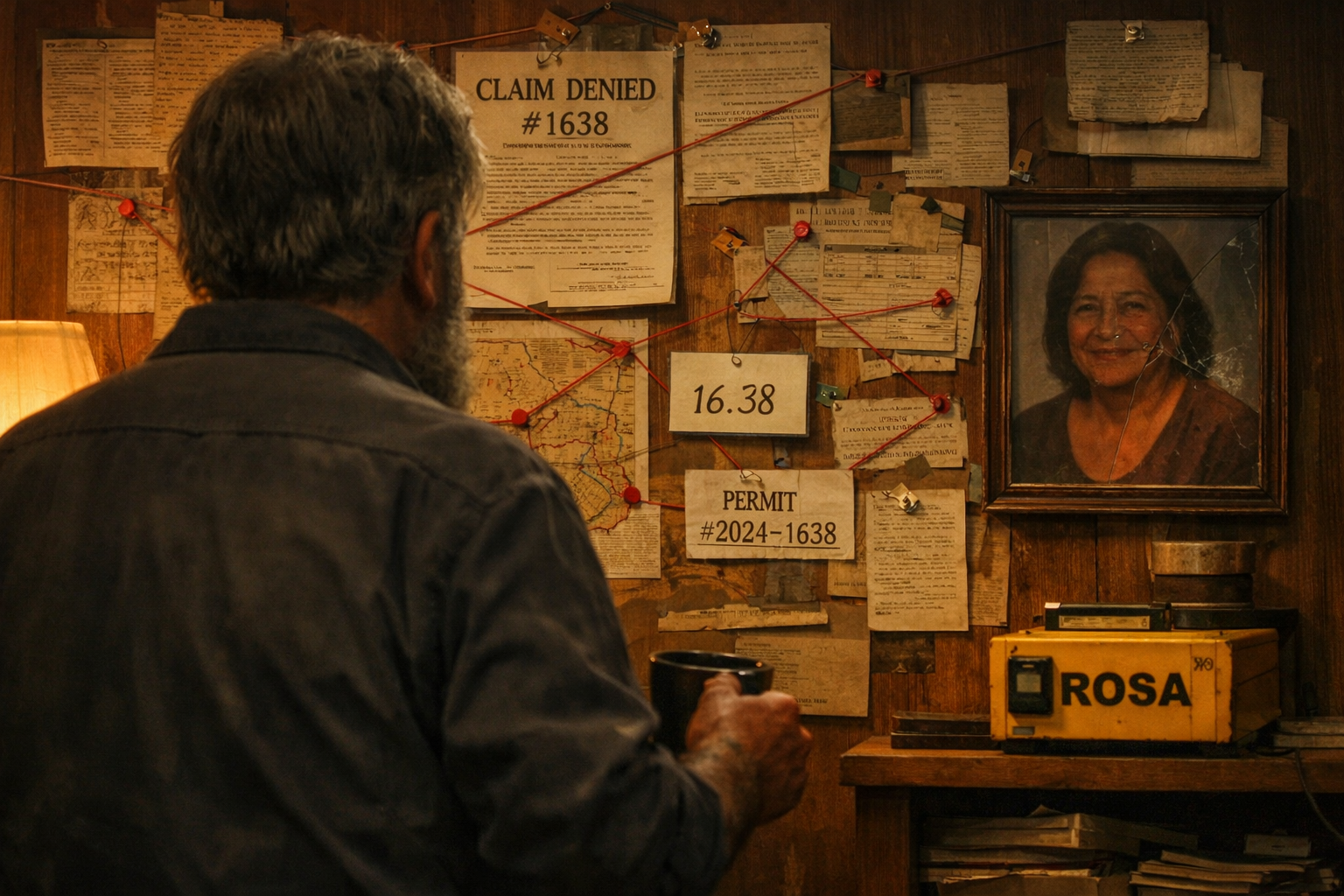
A tremor, almost nothing. A pushpin drops. The earth responds before the system does.
In the council chamber, under buzzing fluorescents, Wade Sutter announces the result from a thunderstorm election: forty-three votes. On Town Manager Sandra Chen's legal pad: 42. Dolores Vega knits in the back row, watching more than the ceremony.
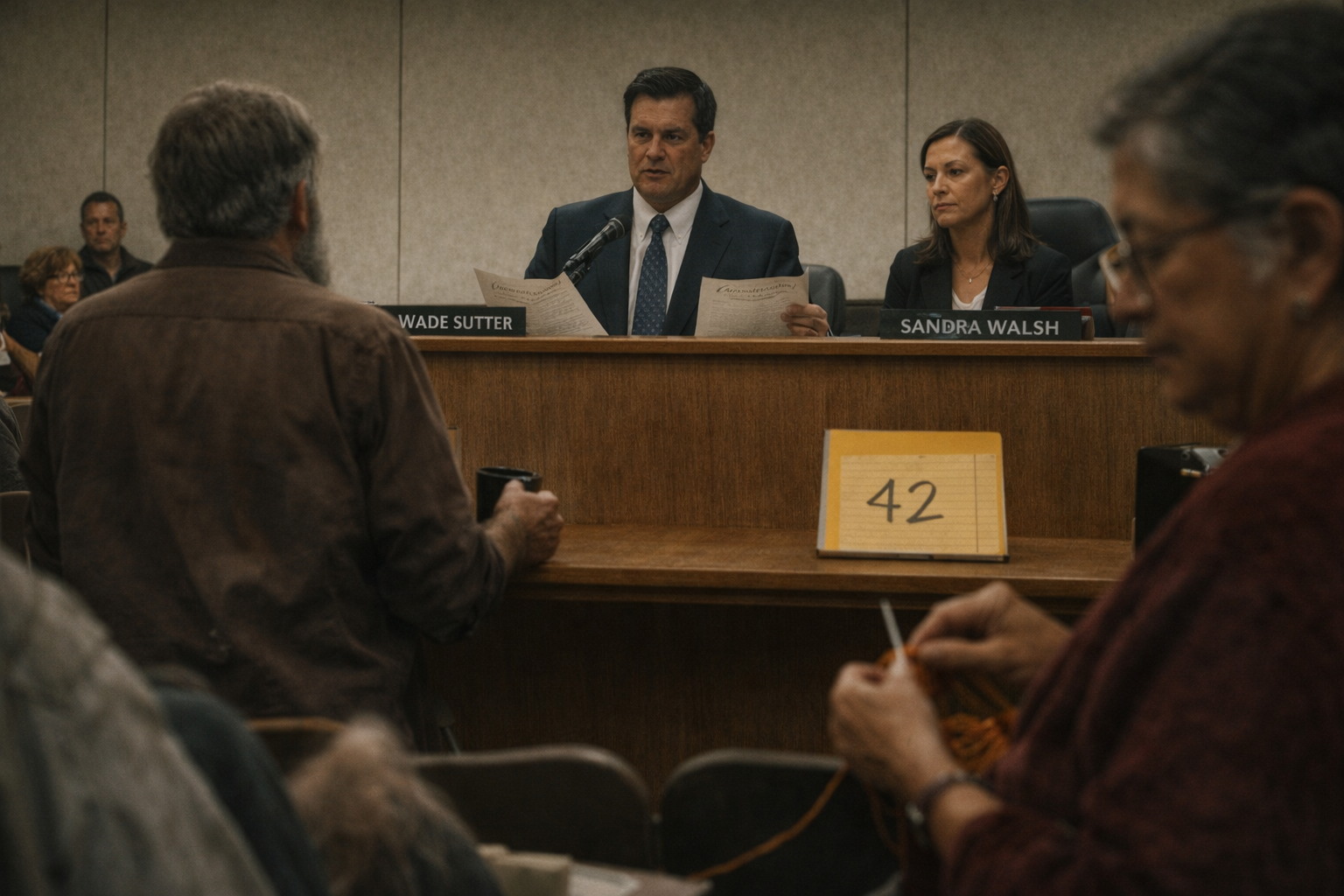
Gil's first request as mayor isn't a ribbon-cutting. It's water-quality records. Injection wells. Oak Street. He came to be "boring." He can't.
The quakes are small but increasing—numbers stacking like invoices. Then the one that matters: magnitude 4.1 at 4:16:38 AM. 1638 embedded in the moment, visible only if you're already looking.
Elena Marsh shows him her basement. A crack runs clean through foundation and drywall—daylight visible through the split. Elena isn't hysterical. She's tired. She's been documenting for years. Nobody looked. Now Gil does.
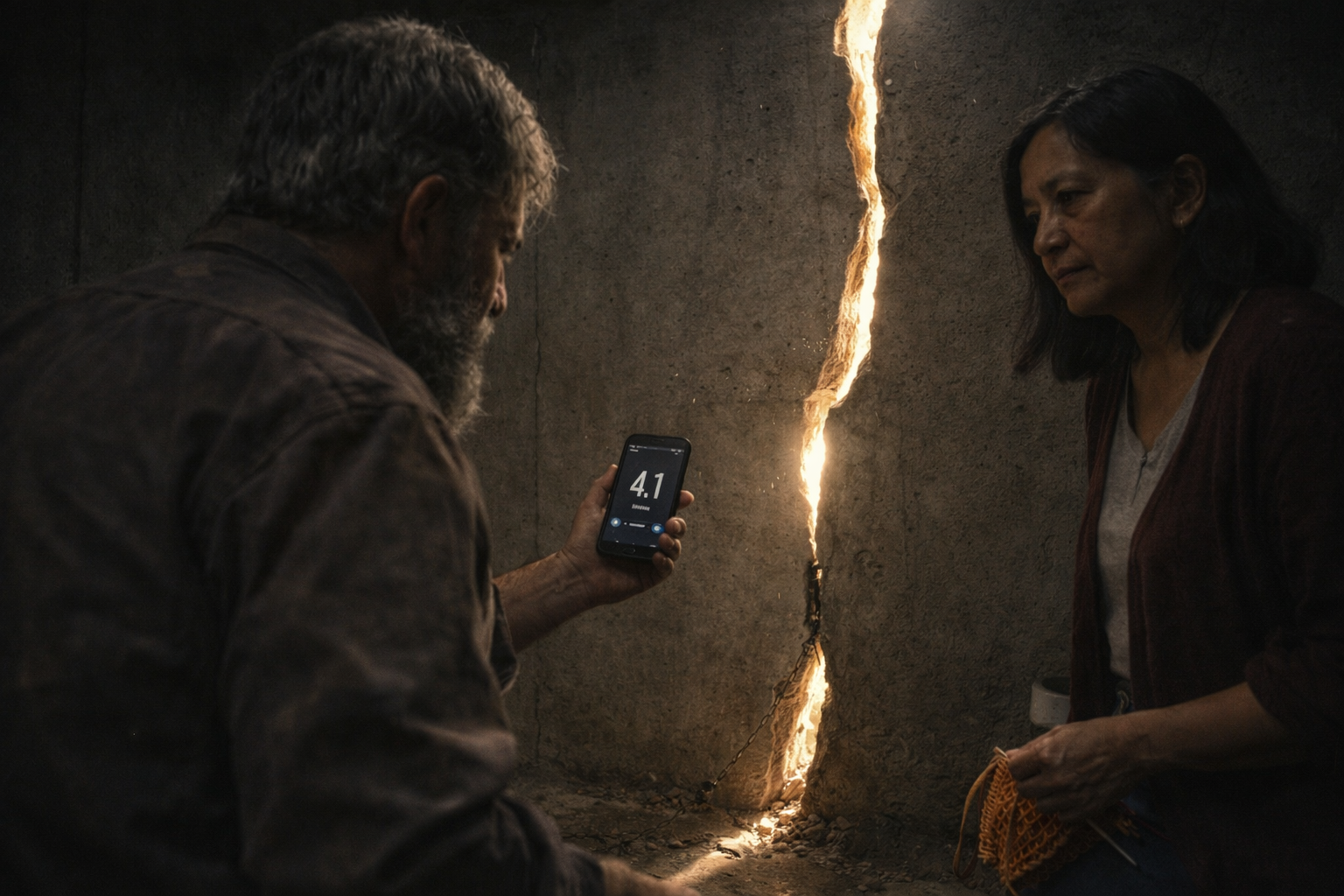
Back at the trailer, the 4.1 shakes the wall apart—papers flutter, pins pop, the altar wounded. Gil catches Rosa's photograph as everything comes loose. Cut to black on a question the town refuses to ask: what's under the cracks?
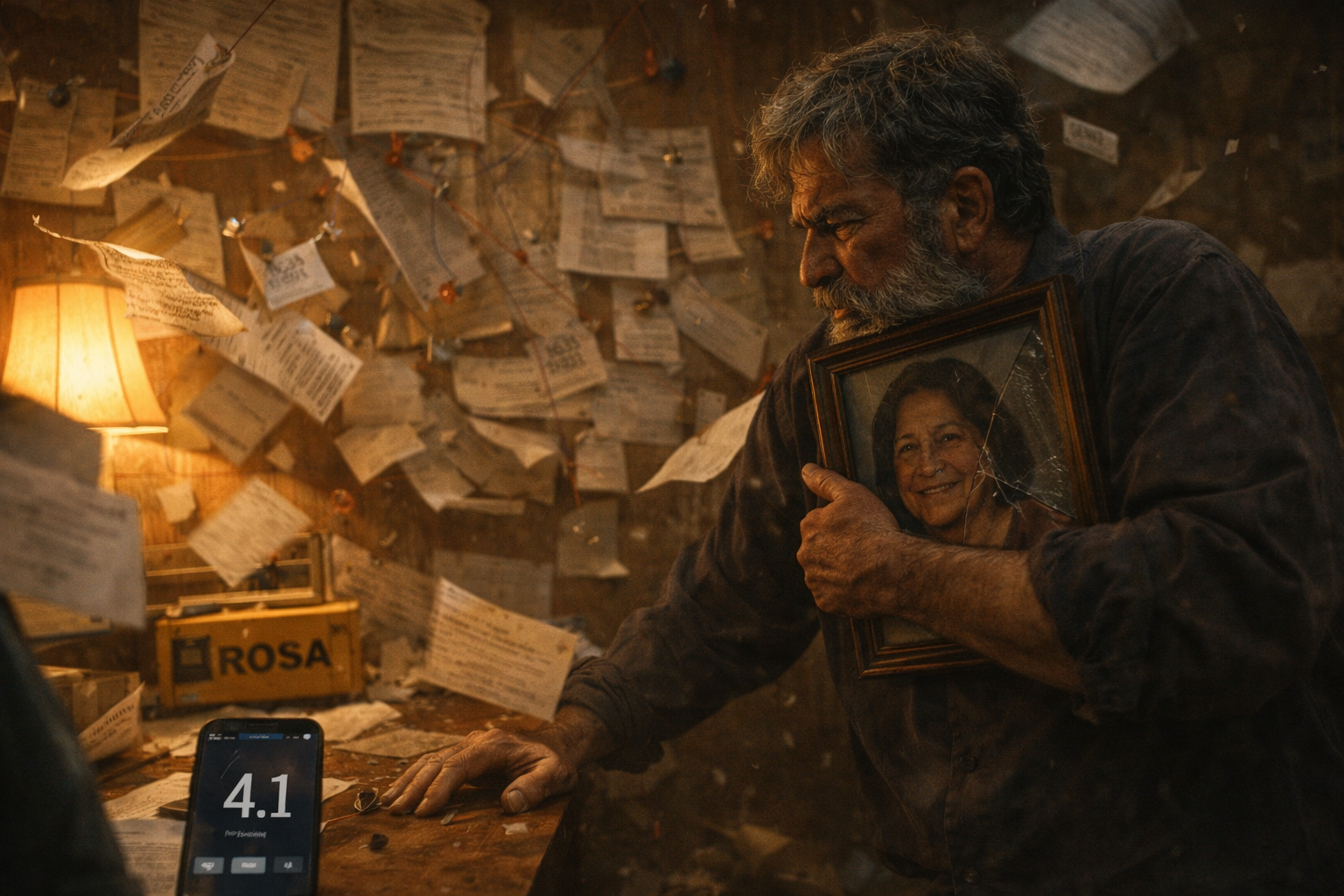
Visual Mode: Documentary light takes over. The investigation leaves Gil's lamp-lit wall and enters harsh New Mexico daylight—where evidence can't hide, only spread.
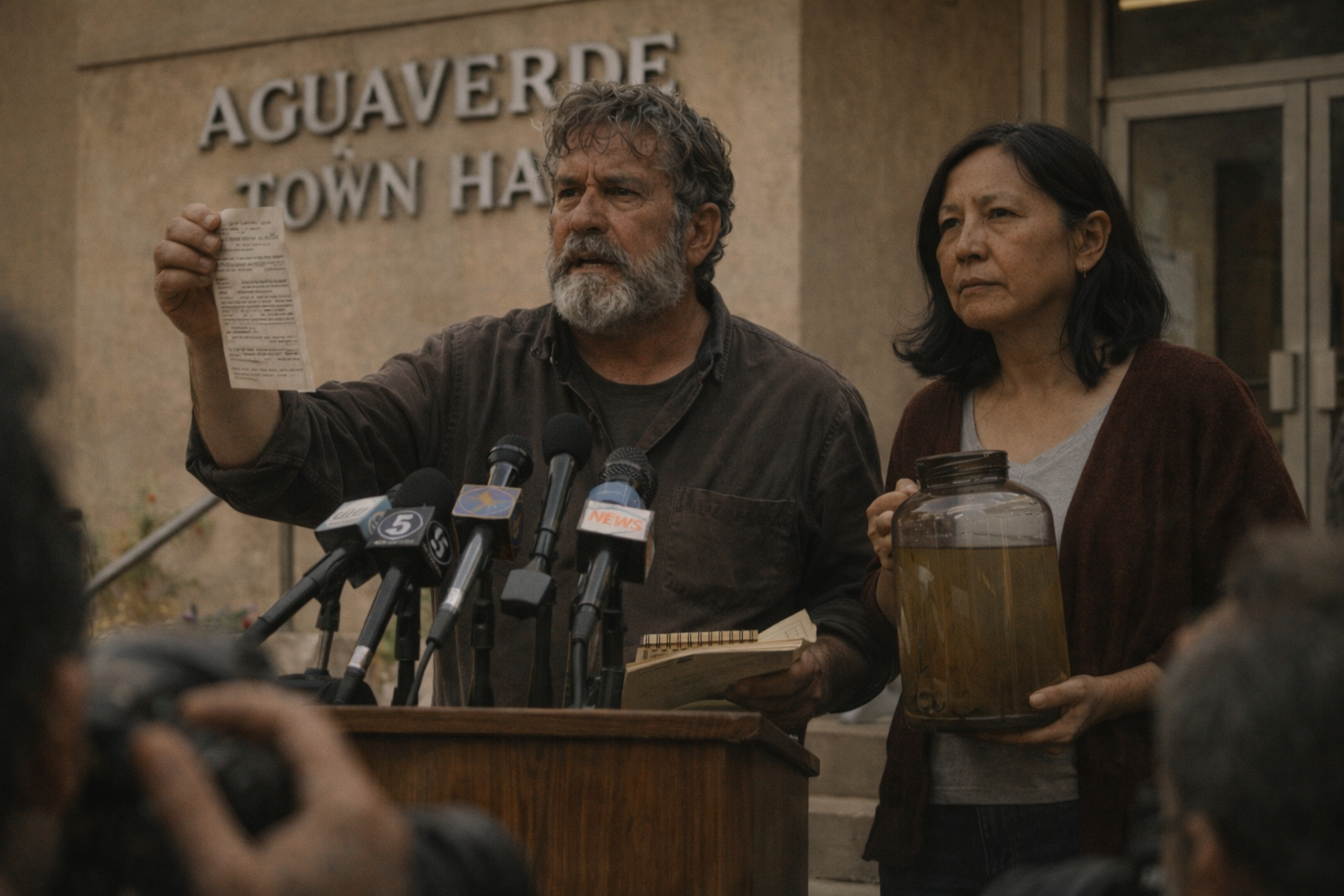
Morning after the 4.1. Emergency session. The council chamber is packed—standing room only. Gil uses procedure like a lever, spreading invoices across the dais. Elena places a jug of brown water where everyone has to look at it.
Wade calls it an oversight. Gil doesn't argue theory—he argues arithmetic. One invoice: $16,380. Another: $32,760. Another: $49,140. Another: $81,900. Four invoices. Four denials. A unit price dressed up as paperwork.
Elena introduces herself and says her address out loud: 1638 Oak Street. It lands in the room like a normal detail. It lands in Gil like a bell. The pattern isn't hidden. It's printed on mailboxes and forms.
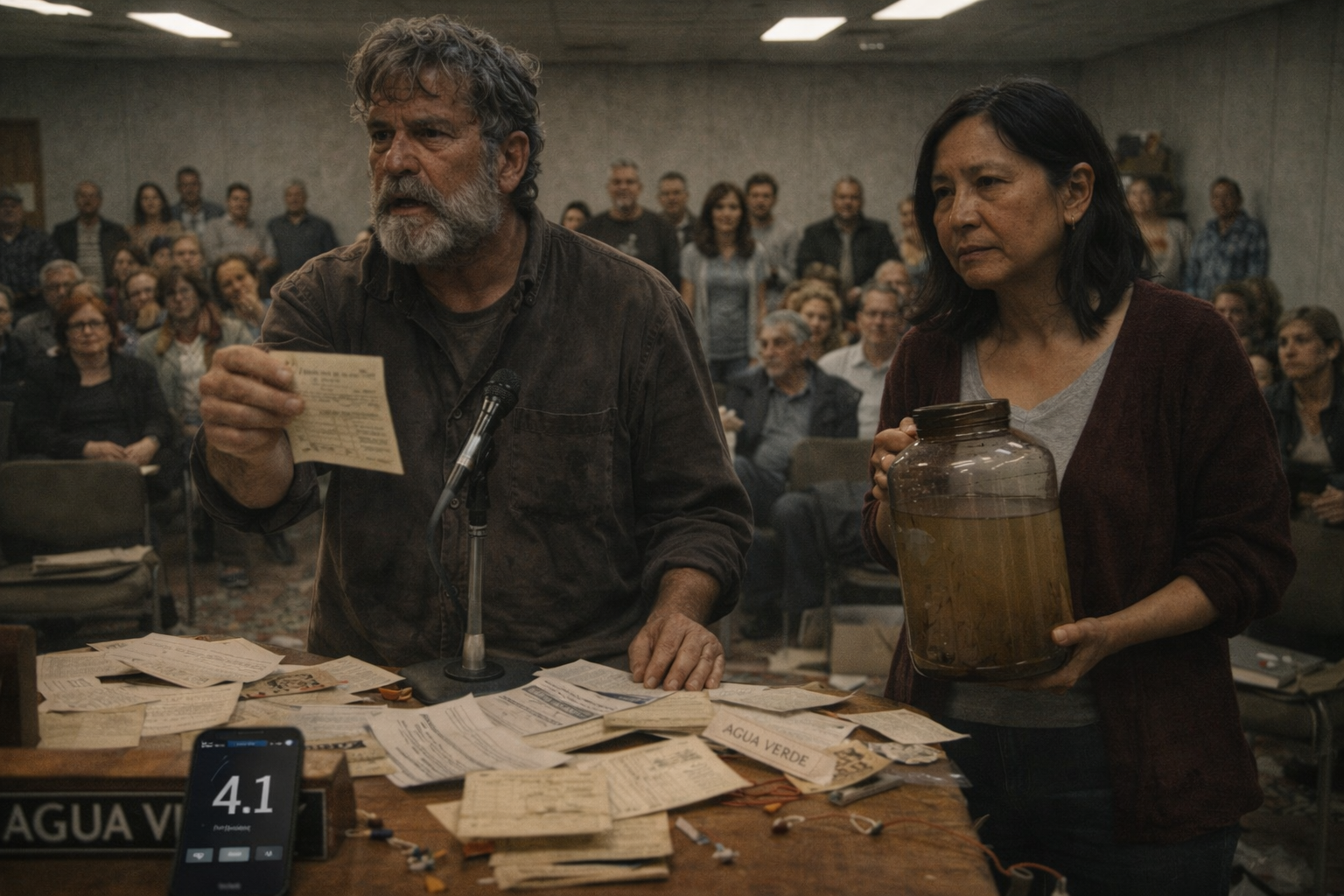
The council votes 3–2 to commission an independent audit. Town Manager Sandra Chen tells Gil, quietly: an audit gives them subpoena power. The system finally has to pull its own records.
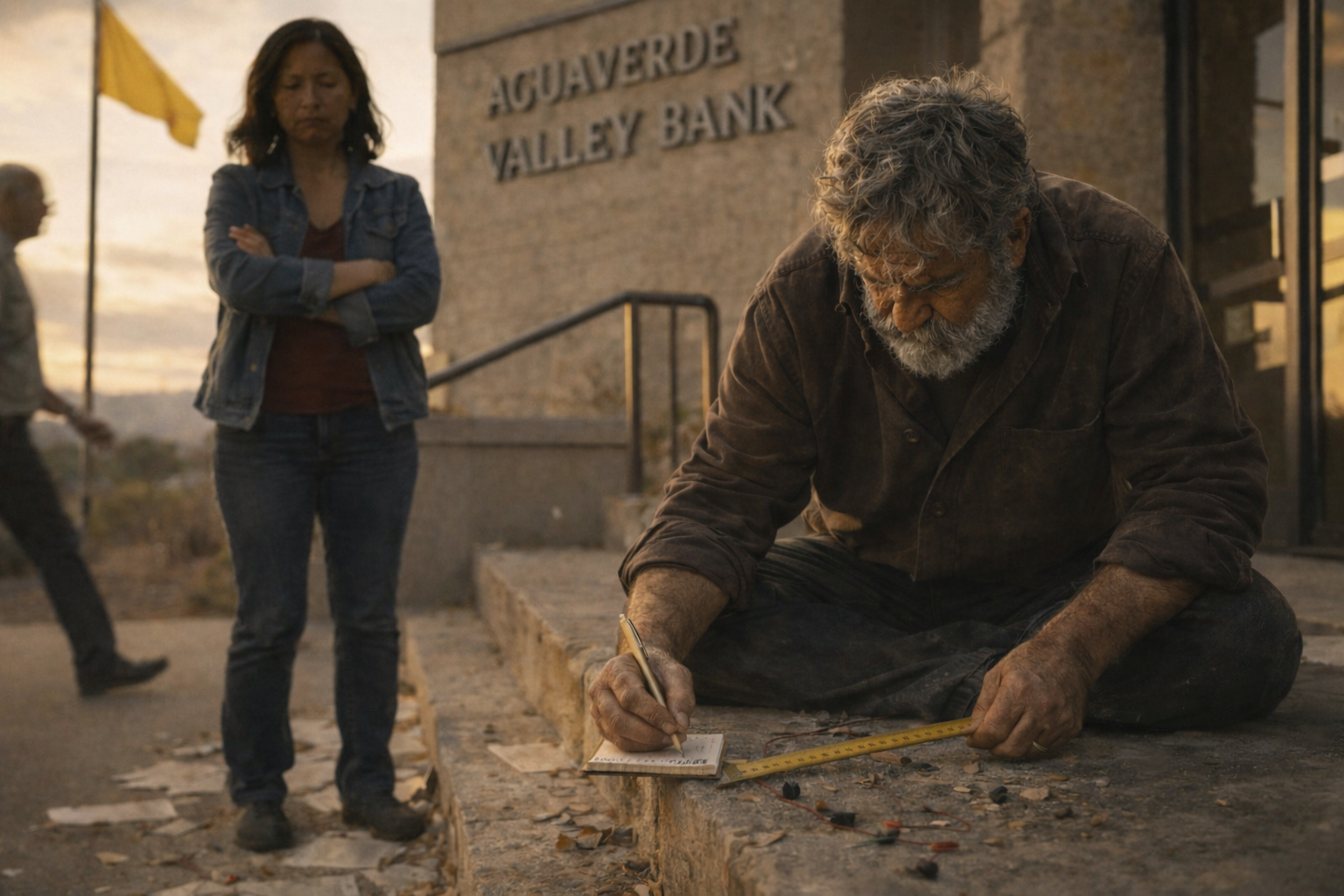
Outside Aguaverde Valley Bank (fictional), Gil crouches on worn granite steps with a tape measure. Destiny stands behind him, arms crossed, watching passersby watch her father. Golden hour makes it beautiful—and humiliating. He's looking at the steps. She's looking at him.
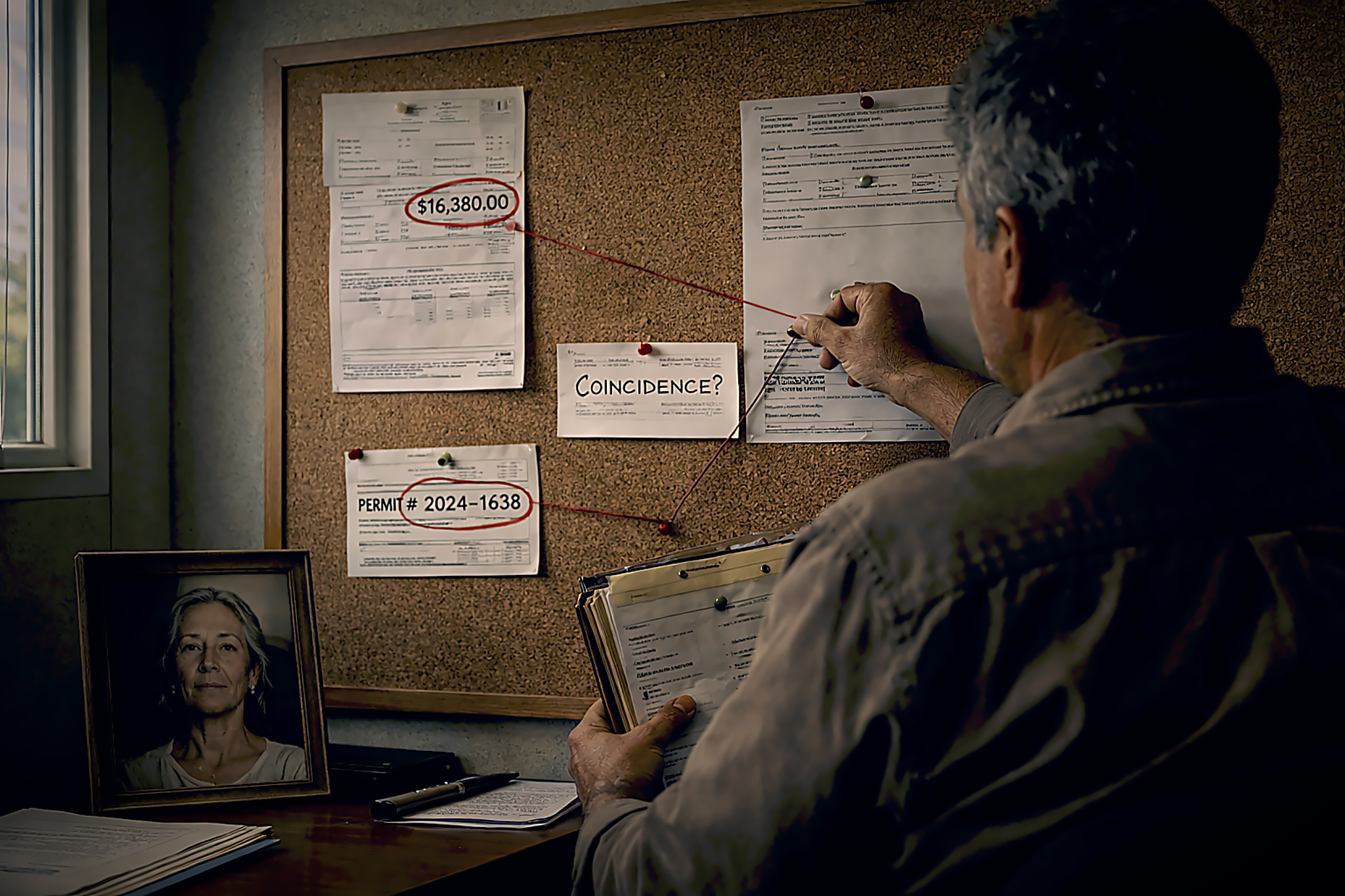
Gil builds a second wall inside City Hall. A corkboard in his mayor's office fills with index cards and circled numbers: $16,380. Permit codes. Dates. The obsession spreads from home to work—paper trail becoming architecture.
Marlene Valdez breaks the story. Press conference on the Town Hall steps. Cameras. Microphones. New Mexico daylight that hides nothing. Elena holds the same jug beside Gil—this time as proof, not accusation.
Flashback: 2019. Gil's podcast goes viral ("Episode 147"). The internet laughs. The town whispers. Destiny gets ambushed outside work: "He's not dangerous. He just… sees things." Gil learns to be careful, to be boring, to keep his mother's number to himself.
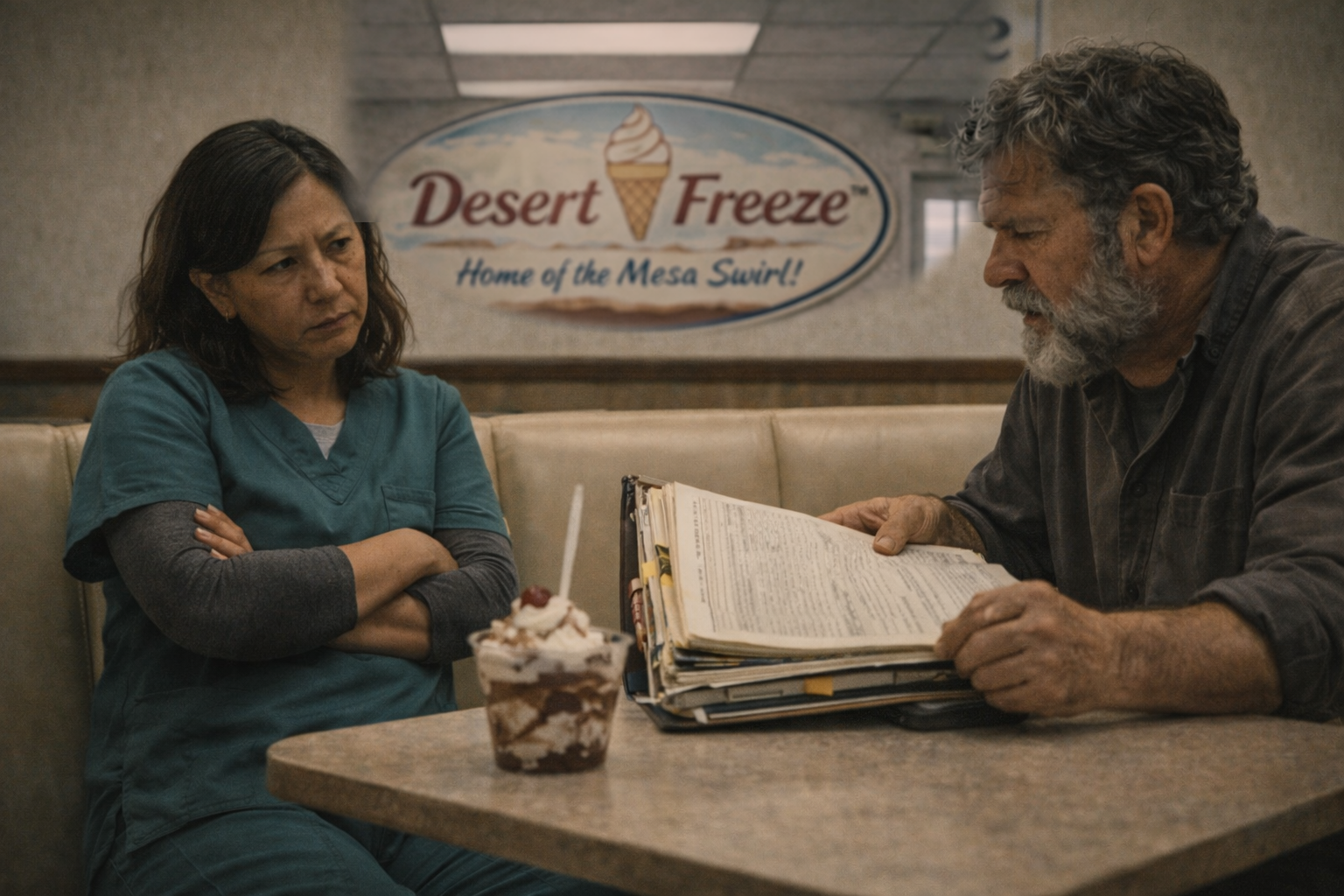
In Desert Freeze™ (fictional), father and daughter sit across a booth with a binder between them. Destiny's Mesa Swirl™ sits untouched. Fluorescent light flattens everything—like the system does. He wants to talk about patterns. She wants her dad back.
She says what hurts most: he can notice anomalies in government documents, but he can't notice what's missing between them. He doesn't know her life—her shift schedule, her cat, the two years of distance. She leaves with the dessert still melting in front of him.
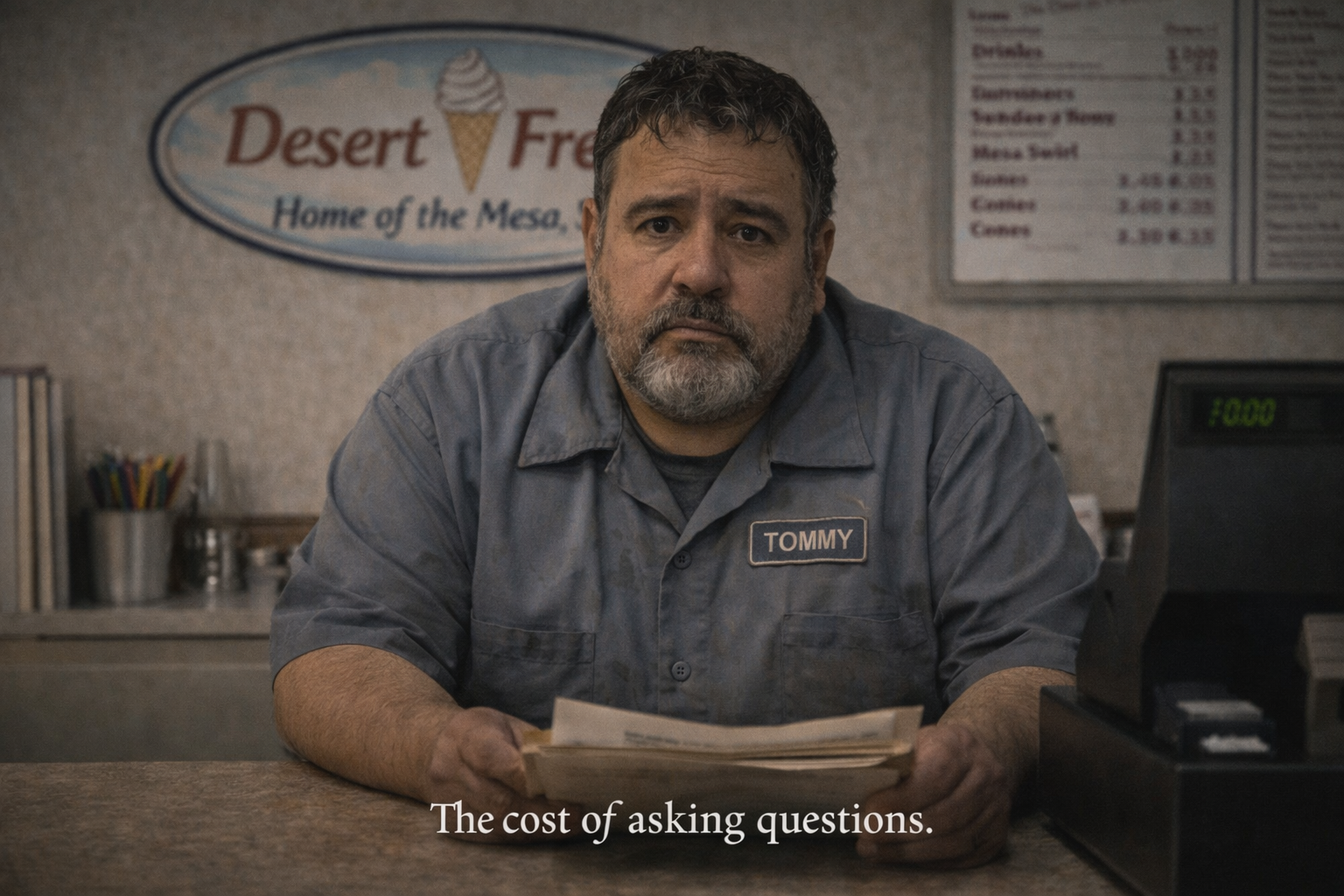
A text from Rick Salazar sends Gil to a voice on the edge: Tommy Benavides in Odessa—working the counter at a Desert Freeze partner stop after his life got bulldozed for asking questions.
Tommy confesses what the paperwork never will: falsified pressure data, disposal volumes, wells pushed past their limits. "That's why the foundations are cracking," he says. "That's why the earthquakes are getting worse." Then the line that matters: questions get people hurt.
Meanwhile, Wade is doing his own math. Forty-seven jobs at Rayborn. Half the volunteer fire department. The clinic's biggest donor. A town that can't afford to lose a payroll—and a wife who can't afford to lose treatment.
Caroline refuses to let her illness be an excuse. She tells him to stop lying to himself. Wade resigns anyway, calling it "family matters," as if the truth can be filed under a softer label.
And in the background, always: Dolores Vega. Town clerk. Thirty-seven years. Knitting in fluorescent light. The system's quiet witness—watching which numbers get written down, and which get changed.
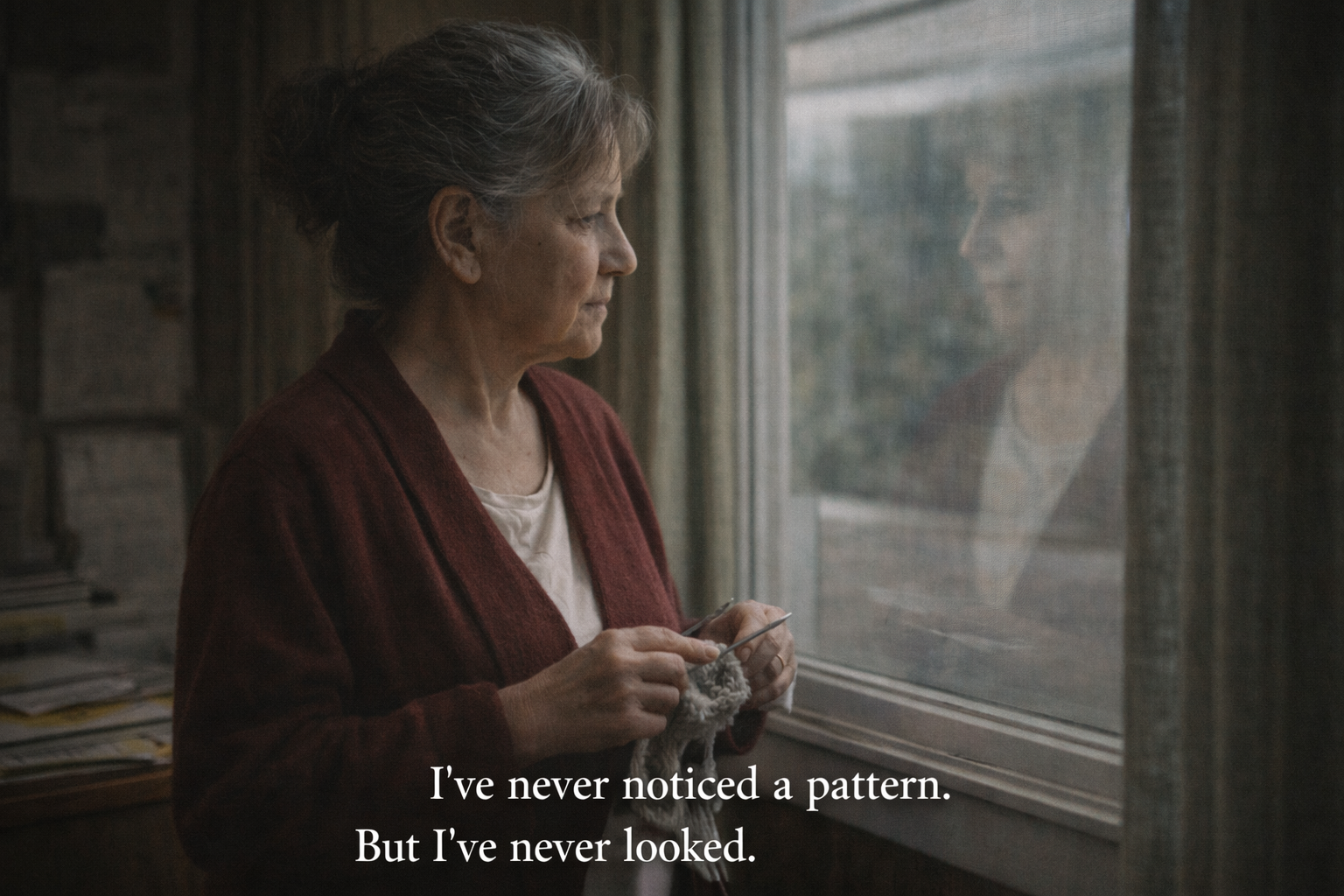
Dolores steps close enough to be heard: you're asking the wrong questions. Then—more urgently—finish it. Ask about the missing records. Ask about the count. She won't give Gil the whole story yet. She just gives him a direction.
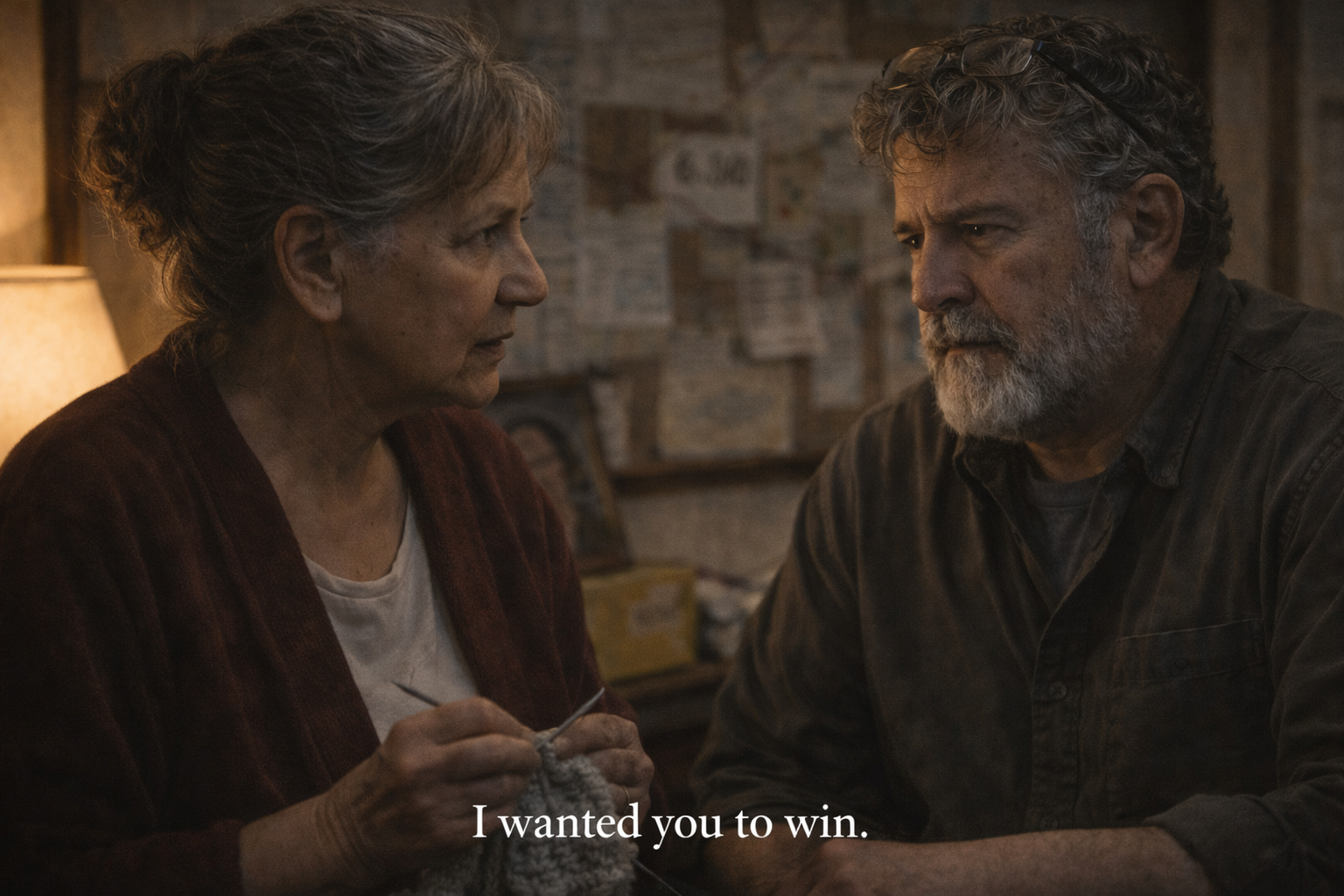
That night, an anonymous tip arrives like a pin dropping onto cork: Unit 1638. Tucumcari. Combination 42-39-81. Gil does the math—42 × 39 = 1638—and feels the investigation turn from suspicion into coordinates.
The pattern stops being a theory. It's a place. A door. Something boxed and waiting in the dark.
An anonymous tip: Unit 1638, Tucumcari. Combination 42-39-81. Gil does the math—42 × 39 = 1638—and feels someone on the other end of the line speaking directly to his obsession.
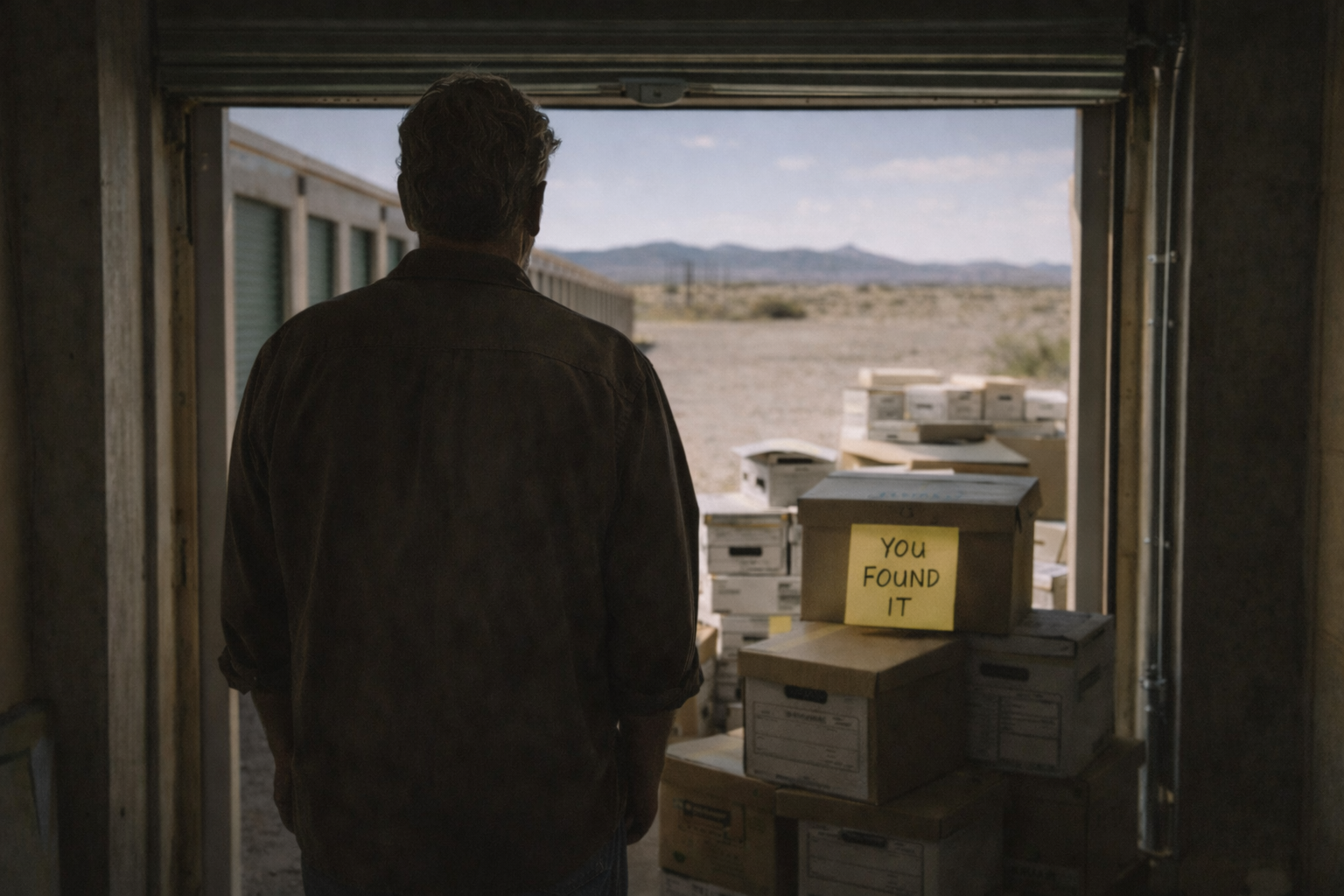
Gil drives to Tucumcari. The storage unit door rolls up on a dozen filing boxes. On top: a Post-It in block letters—YOU FOUND IT. Same blunt handwriting as the earlier notes. He pockets it before he opens the first box.
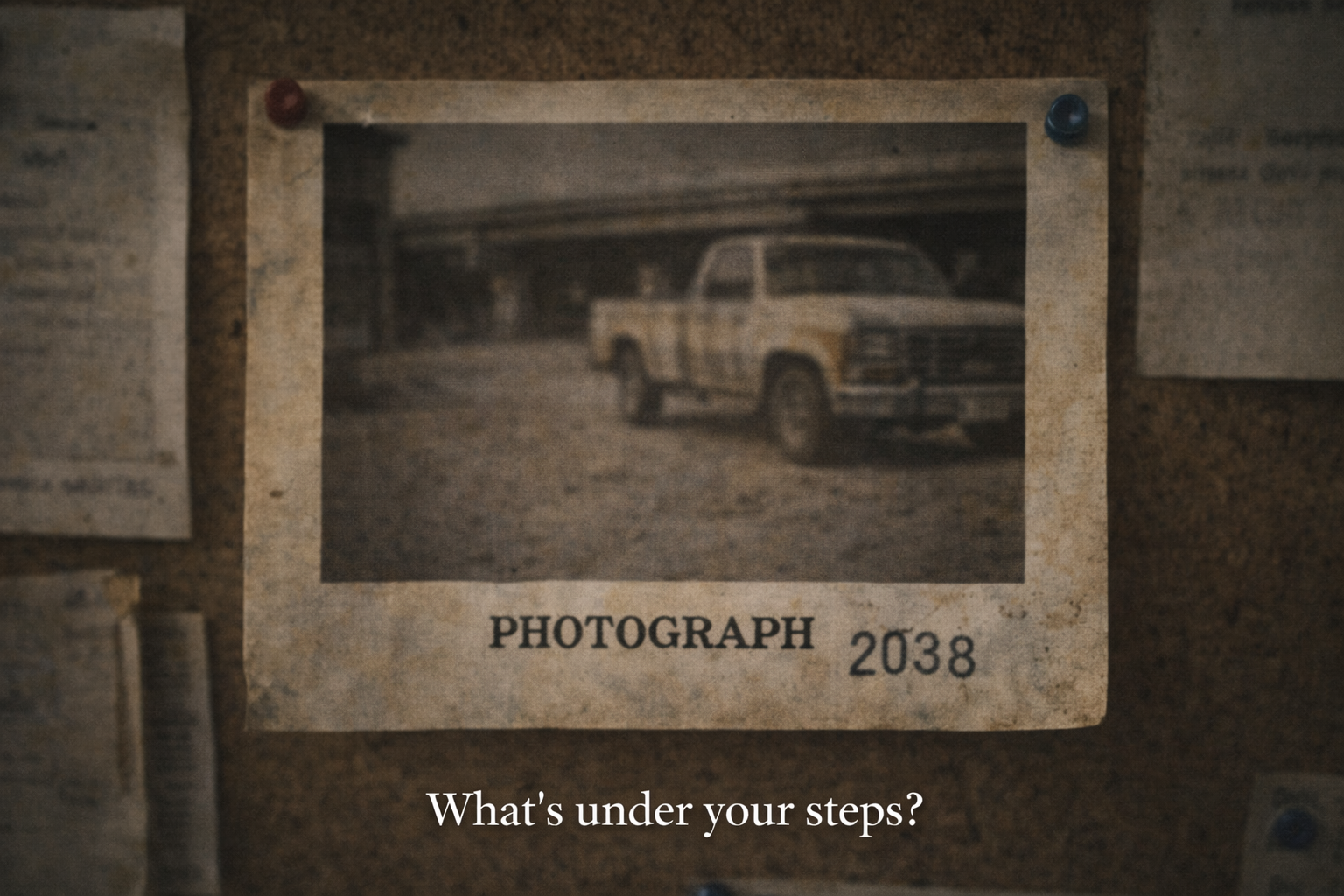
Inside: pressure logs with handwritten adjustments, volume records showing wells operating far above capacity, and a faded photograph stamped June 16, 2038. Future. Impossible. On the back: BASELINE = WIND PATH. Not every anomaly will resolve—but the boxes are real, and the damage is already done.
Visual Mode: Mode C — Perception (golden hour) returns, then the film descends back into Mode A darkness. Beauty doesn't arrive as relief—it arrives as recognition. The ending becomes transmission.
Destiny comes to the trailer with clinic funding paperwork—numbers that should be boring. The same figure keeps appearing, like a watermark: $163,800… then its halves, quarters, and echoes.
Gil isn't chasing a villain anymore. The pattern has outgrown conspiracy. What he's finding feels worse: a system—self-sustaining, indifferent, and old.
Destiny says it's less dramatic. Gil says that's what scares him: conspiracies can be exposed; systems just continue.
Then Destiny asks the question that changes the ending: the injection wells are recent, but the foundation damage on Oak Street goes back decades. So what's under the foundations?
Fill sand. Every slab and crawlspace along Oak Street—along the baseline—built on cheap sand sold off after the Trinity settling ponds were drained. The wind carried fallout; it settled; they sold it; everyone built on it. "We're on it right now."
Elena's Geiger readings aren't coming from the wells. They're coming from underneath. The wells cracked the slabs. The cracks let it up.
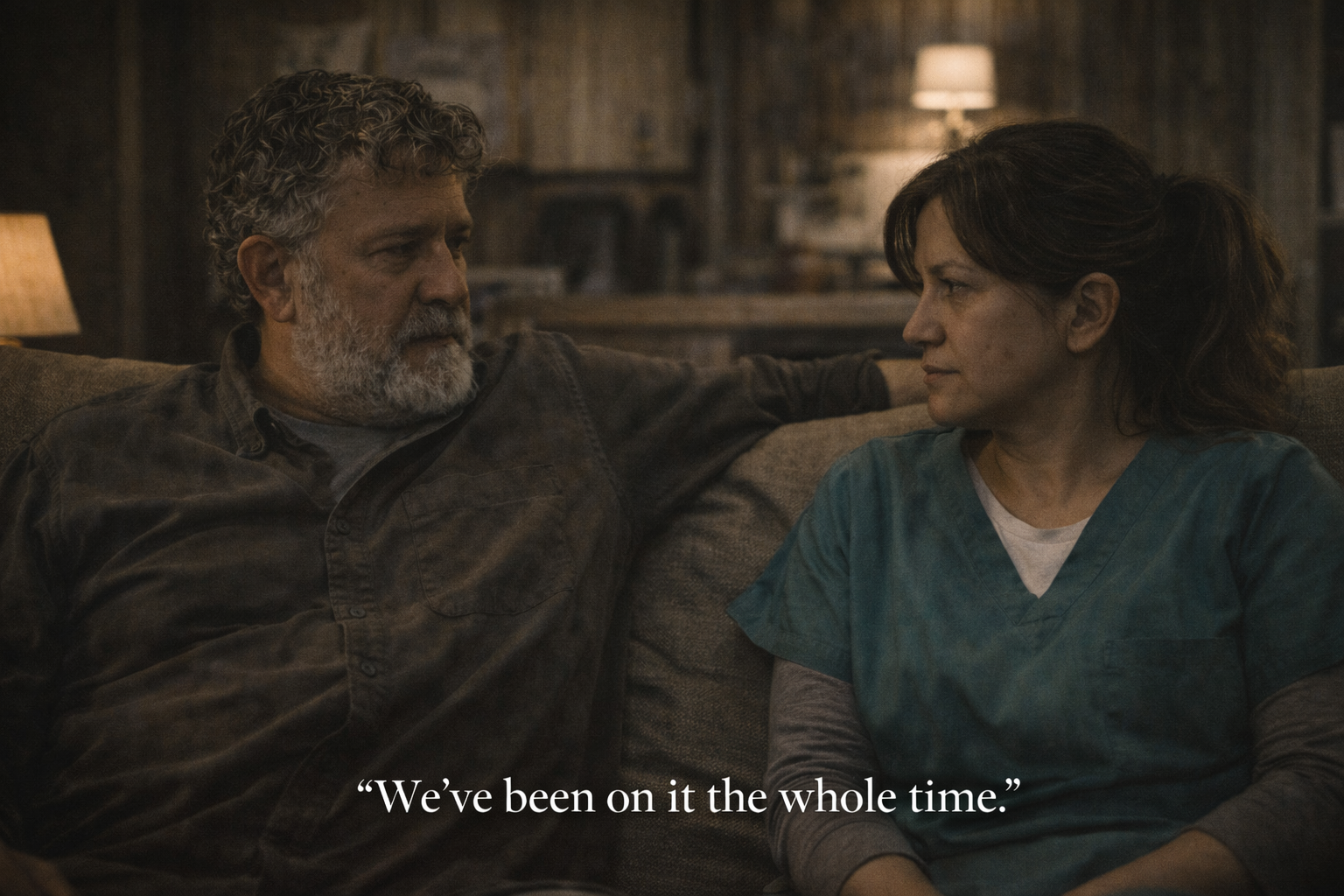
Destiny leans against him. It's the first physical contact in years. Apologies don't fix what's broken, but the night allows one truthful sentence: "I'm sorry."
After the couch, Destiny goes home in late-afternoon light. Golden hour—the same light that once made the steps feel ordinary.
She reaches her apartment building. Four steps. Routine. Home.
A hairline crack in the concrete. The edge of one step slightly lower than the next. The kind of thing you'd never notice until you do. The kind of thing her father would notice immediately. Now she can too.
She reaches for her keys. Stops. Pockets them.
She turns away from the entrance and walks back down the steps. She can't go home. Not to this home. Not anymore.
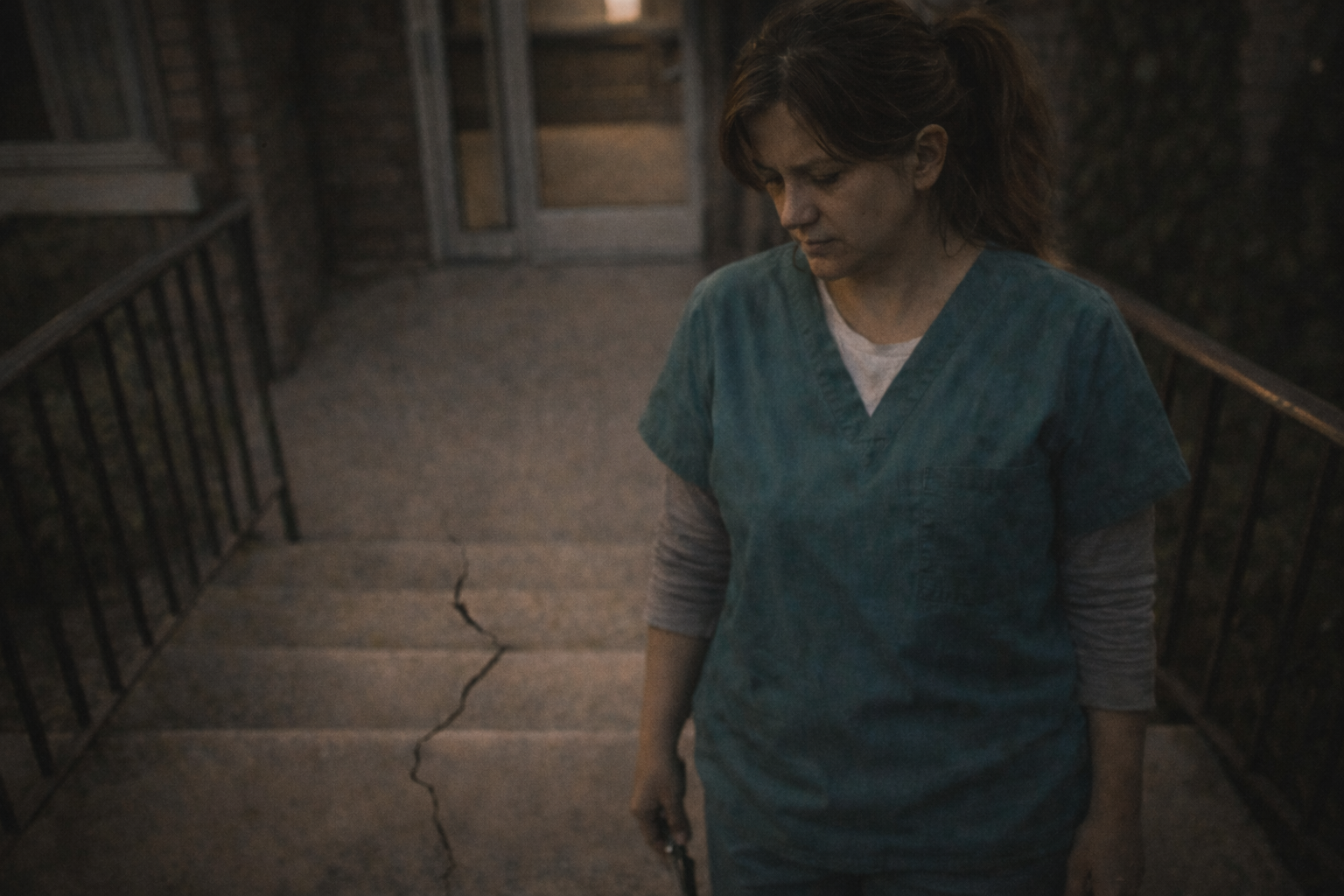
Hold on the steps after she's gone. The crack. The settlement. The ordinary thing that will never be ordinary again. The infection is complete.
Destiny sleeps on the couch. Her keys sit on the small table. Across the room, Gil stands at the wall—rebuilt, tighter, cleaner. At the center: the finished equation. 1638 ÷ 43 = 38 r 4. Nearby: Rosa's photograph, the Geiger counter labeled with her name, and the photograph dated 2038—still pinned there, still ordinary, still wrong.
He pulls the election certification from a folder. Sandra's "42" is there—crossed out, overwritten as "43." Dolores Vega's late-night confession echoes: the count was forty-two. She added one.
He looks at Rosa's photograph. At the invoices. The permits. The water tests. The falsified logs. Boring documents turned into a confession.
"It isn't justice," he whispers. "You didn't get justice. But you got proof."
Then—slowly—his gaze shifts. Not a snap. A drift. His eyes find the camera like finding a crack in concrete.
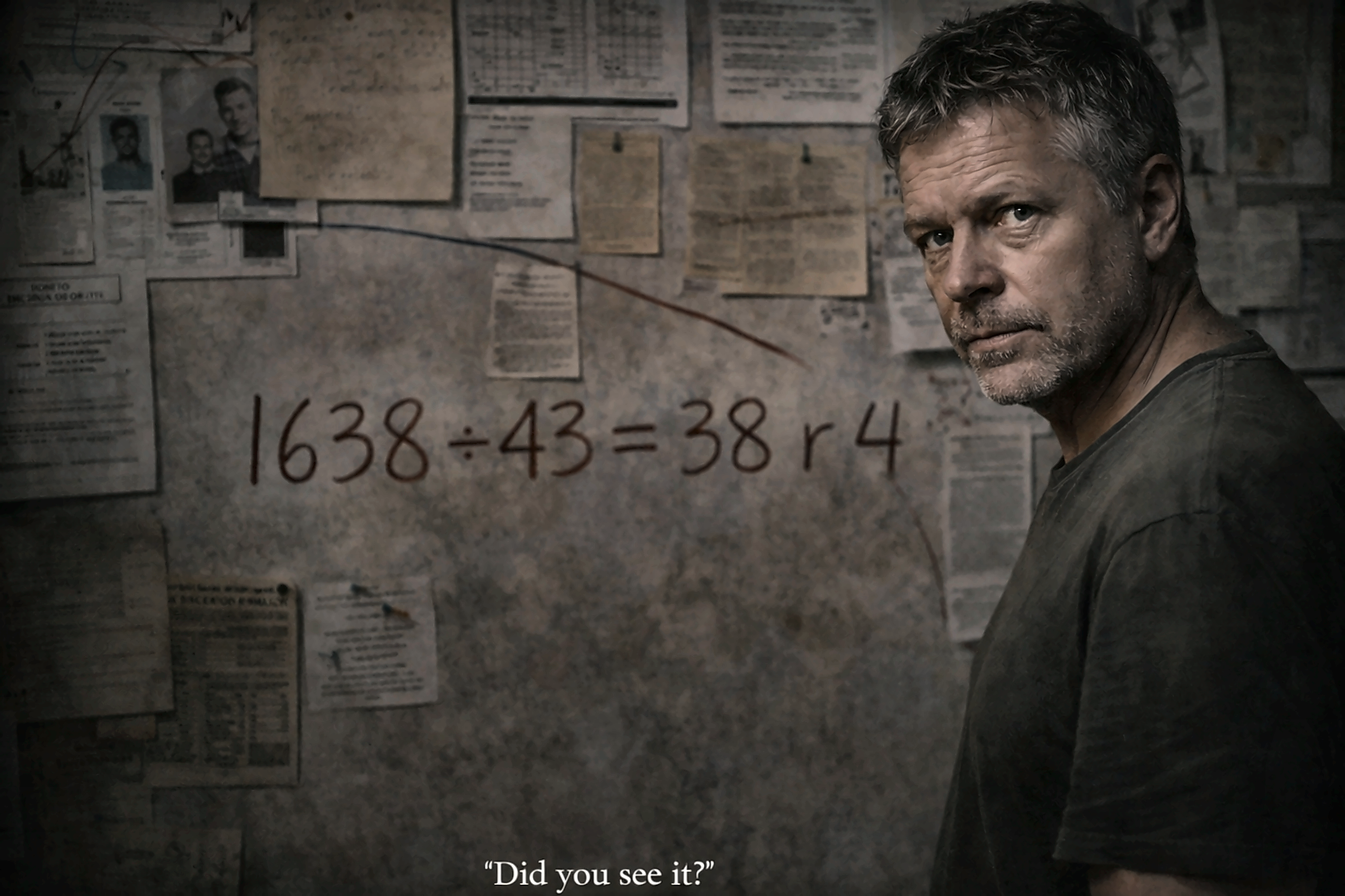
The camera holds. He turns back to the wall. Five seconds. Ten. The room hums. The pattern waits.
The camera doesn't stay on the wall. It drifts down—past Gil's boots, past the linoleum "lid"—and slips through the floor into the crawlspace beneath the trailer. Raw sand. Foundation fill. Ordinary grit.
A slow click begins. The Geiger counter. Rosa's counter. The sound from Scene 1—now coming from where it belongs. The ending isn't a puzzle. It's confirmation.
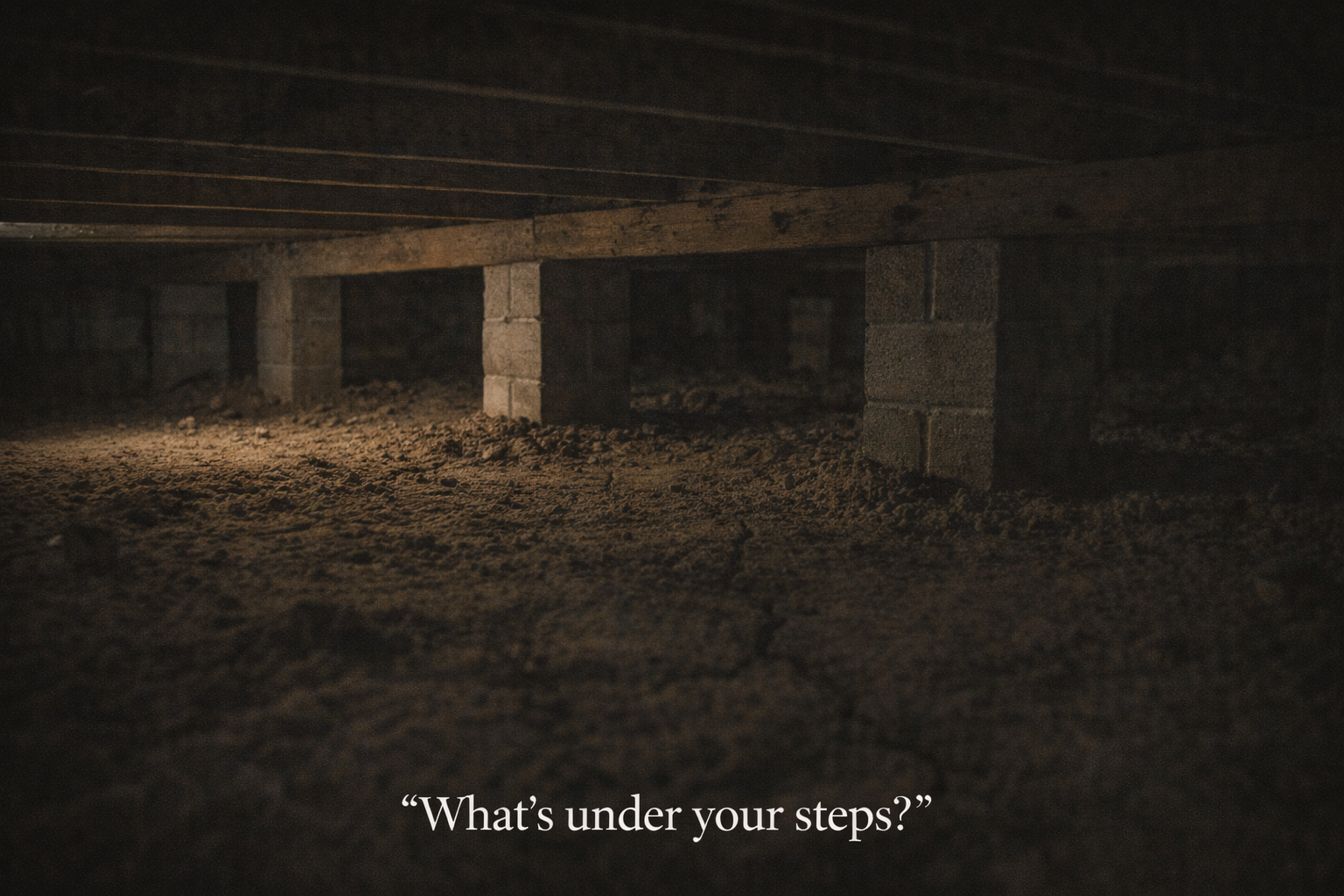
Cut to black. Silence that feels radioactive.
hegot43votes.com
The horror isn't what happened in Aguaverde. The horror is that Aguaverde is everywhere.
Watching this film changes how you see ordinary things.
Cracks in concrete. Settlement in steps. Numbers on permits. The sound of a Geiger counter. After the credits roll, these don't feel neutral anymore.
The film doesn't end when the screen goes black. It follows you home. It asks one question you can't stop asking:
What's under your steps?
The horror isn't what happened in Aguaverde.
The horror is realizing Aguaverde is everywhere.
The film operates in two distinct visual modes. OBSESSION: single-source lamp lighting, warm and claustrophobic, Gil's trailer and his wall of evidence. INSTITUTIONAL: flat fluorescent lighting, cold and bureaucratic, council chambers and government offices. These two modes are incompatible realities. The audience learns to read the difference — and to feel the friction when they collide.
Beat One: Gil explains what's under the floor — fill sand from Trinity settling ponds, contaminated with fallout, sold cheap in the sixties. Every foundation on the baseline is built on it. "We're on it right now."
Beat Two: Destiny goes home. Looks at her apartment steps. Sees a hairline crack she's walked past a thousand times. She can't go inside. The infection is complete.
Beat Three: Gil completes the equation. The camera breaks from objective observation and enters his subjective reality. "Did you see it?" The question passes to the audience.
Beat Four: The camera descends through the floor into the crawlspace. Raw sand. Geiger clicks. Rosa's counter. The ending is confirmation, not revelation.
This sequence is the heart of the film's emotional structure. Destiny learns about the fill sand at Gil's trailer (Scene 54), then returns home and sees her own steps differently (Scene 54A). The order matters: it's not mystery → explanation. It's knowledge → infection. She can never unsee what she now knows. That's Gil's curse passing to her.
Everything we've watched — the invoices, the permits, the water tests, the council meetings — was paper. Surface investigation. Gil was digging in documents when the truth was under the floor. The descent into the crawlspace is the moment the film pivots from WHAT THEY HID to WHAT WAS ALWAYS THERE. Rosa's Geiger counter from Scene 1 pays off here. Her suspicion. His confirmation. The clicks are her voice finally being heard.
On Gil's wall: a photograph dated June 16, 2038. Twelve years in the future. It's not time travel. It's not a sequel setup. It's likely a date format error, a bureaucratic typo Gil can't let go of. The point: not every pattern resolves. Some anomalies are just anomalies. The photograph should feel ordinary — just another piece of paper pinned to a wall full of paper. The audience should feel the weight of Gil's inability to let anything go.
"I notice things. That's all. I notice, and I look into it, and if there's nothing there, fine. But if there's something—"
— Gil Padilla
Distribution Strategy
RECALL is positioned for a festival-first release. The goal is not exposure for its own sake but strategic placement: the right premiere establishes the film's identity, attracts the right distribution partners, and creates a narrative that carries through theatrical release and beyond.
We are targeting three festivals, each representing a distinct pathway. The film can only premiere once. These are not backup options—they are alternative strategies based on where the film lands in the submission cycle and which programmers respond to the material.
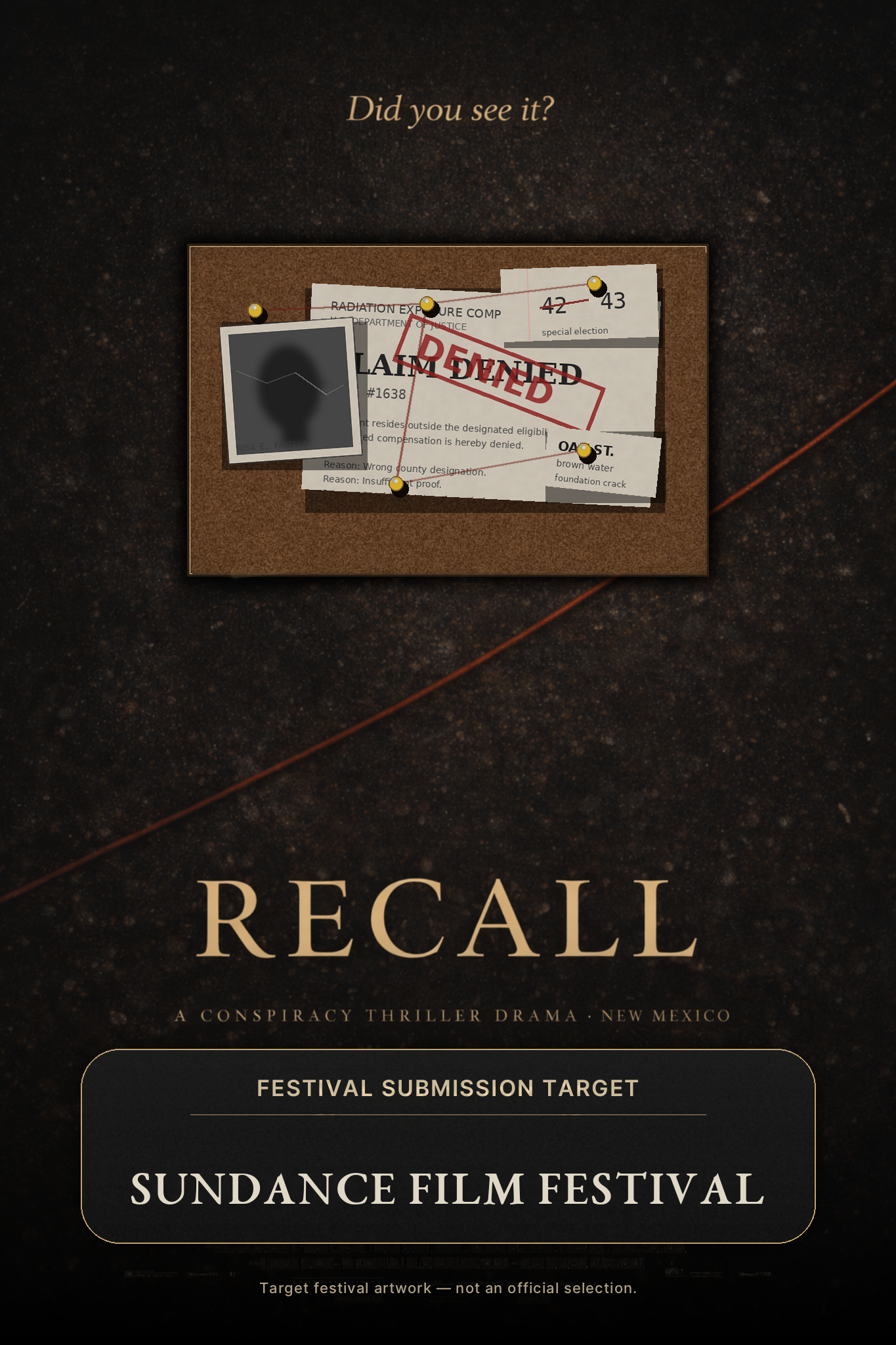
Target: U.S. Dramatic Competition
Sundance is the American independent film market. A premiere in U.S. Dramatic Competition positions RECALL as the year's essential American indie—the film that defines a moment. This is where A24, Neon, and Focus Features come to acquire. Where critics establish consensus. Where a film becomes a conversation.
RECALL fits the Sundance programming sensibility: character-first, politically engaged, formally precise but not alienating. The conspiracy-podcaster-becomes-mayor hook is high-concept enough for trade coverage, but the execution is intimate—a grief story disguised as a thriller. Sundance programmers have historically responded to films that weaponize genre conventions against themselves. RECALL looks like a paranoid thriller and plays like a family drama.
Comparable Precedents
Dark Waters (environmental conspiracy, institutional rot), Spotlight (investigative procedural, document-driven), Captain Fantastic (quirky protagonist, family reconciliation), Winter's Bone (regional America, institutional violence). All premiered at major festivals and found theatrical distribution on the strength of their festival positioning.
Objective: North American distribution deal. Critical establishment as prestige American indie. Platform for awards-season conversation if release timing aligns.
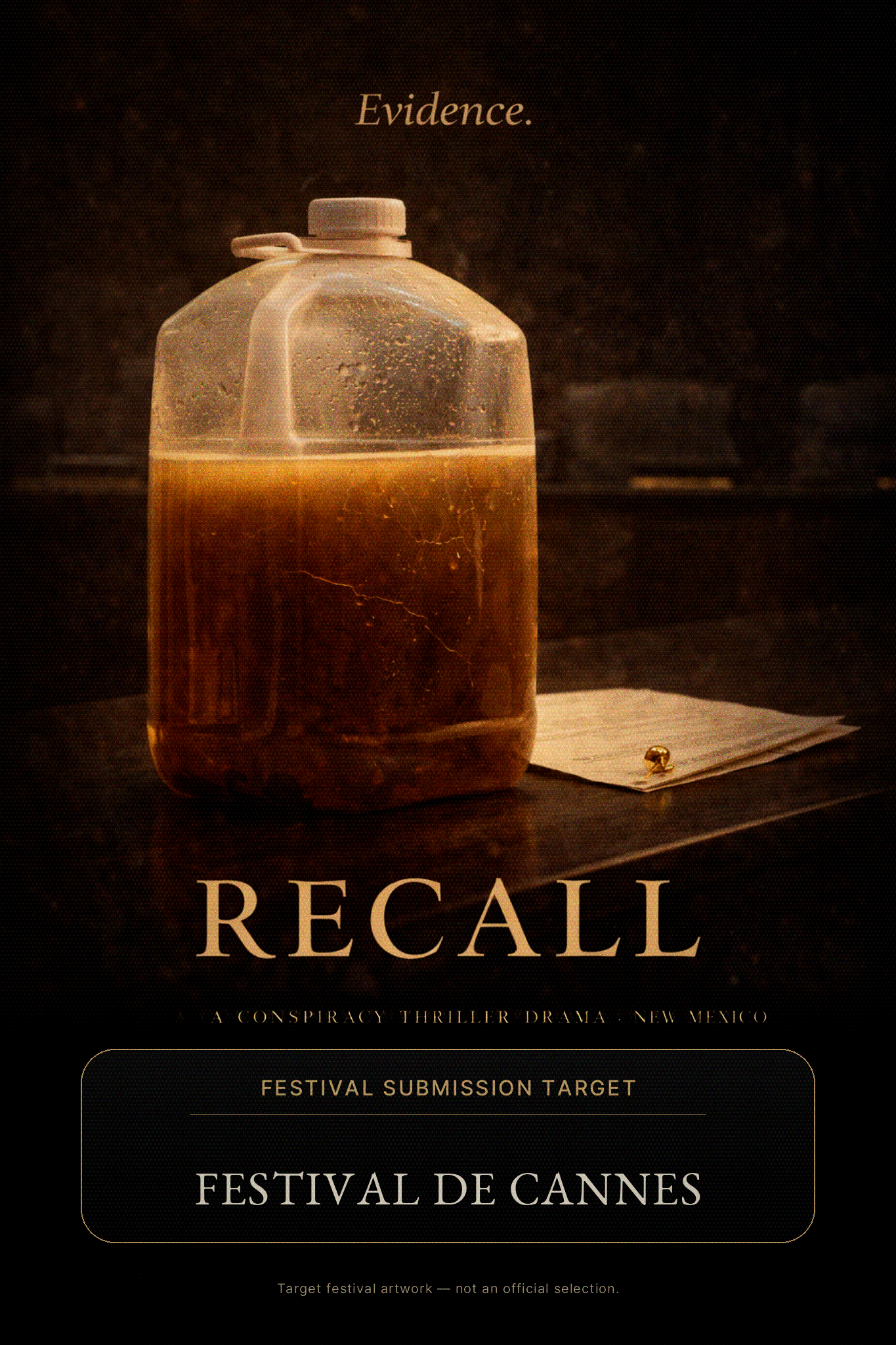
Target: Un Certain Regard
Cannes is the international prestige play. Un Certain Regard programs formally ambitious work that doesn't quite fit the Competition's auteur-driven mandate—exactly where a first feature from new filmmakers belongs. A Cannes selection signals to European buyers, co-production partners, and international press that RECALL operates at the highest level of craft.
The film's visual grammar aligns with what Cannes programmers seek: the icon-object approach (the jug, the wall, the cracked photograph), the 2.39:1 anamorphic framing, the systematic attention to compositional rhyme. Cannes has always valued cinema that trusts images over exposition. Elena holding brown water is a poster. It needs no explanation.
Strategic Value
Cannes opens doors that Sundance cannot. European co-production financing for Pattern Films' subsequent projects. Access to international sales agents who package films for worldwide distribution. The Marché du Film runs concurrently—buyers from sixty countries attend. A Cannes premiere establishes Pattern Films as a production entity with international ambitions, not a one-film operation.
Objective: International sales. European co-production relationships for future projects. Critical positioning as formally rigorous cinema, not simply "American indie."

Target: Panorama or Forum
Berlin is the political festival. Where Cannes privileges form and Sundance privileges character, Berlin privileges engagement—films that mean something beyond themselves. RECALL's subject matter (environmental contamination, institutional denial, the bureaucratic violence of claim forms and blank verification lines) aligns precisely with Berlin's programming identity.
The Trinity test resonates differently in Europe. American nuclear history is world history. The downwinders aren't a regional story—they're a template for how governments everywhere manage inconvenient populations. Berlin programmers understand this. The film's central question (can you prove a conspiracy without becoming a conspiracy theorist?) has obvious European parallels in how institutions handle whistleblowers, how bureaucracy insulates power, how denial becomes policy.
Timing Advantage
Berlinale runs in February—before Cannes, after Sundance submissions close. If the Sundance cycle doesn't align, Berlin offers a world premiere slot that still positions the film for spring/summer theatrical release. The European Film Market runs concurrently. German broadcasters and distributors attend in force. A Berlin premiere could anchor a German-language territory deal that finances post-production or provides P&A support.
Objective: Political positioning. German/European distribution. Documentary-adjacent credibility that opens doors for hybrid theatrical/educational release.
Festival strategy is not about maximizing exposure—it's about controlling the narrative. A film premieres once. That premiere defines everything that follows: which critics write first reviews, which buyers see the film in what context, what expectations audiences bring to theatrical release.
RECALL will submit to one primary festival based on production timeline and strategic assessment. The premiere establishes identity. Secondary festivals (Toronto, Telluride, New York, London) provide sustained visibility. Theatrical release follows within six months of premiere, while festival momentum holds.
Materials
Primary Materials
Production Materials
Director's Annotated Screenplay. Visual grammar, scene relationships, compositional intent.
1638
Rosa's case number. The shape of grief. It was here all along.
What's under your steps?
A production company specializing in systematic cinema and character-driven storytelling. Based in Albuquerque, New Mexico, we develop projects that find structure within constraint and meaning within form.
Writer / Producer
Background in systematic research and complex narrative development. Author of The First Fault-Line. Graduate work at UC San Diego and Caltech. She writes films about people who arrive late—to responsibility, to clarity, to courage—and who discover that lateness doesn't disqualify them.
Cinematographer / Producer
50+ years of experience in film and television production. Visual storytelling with emphasis on practical, location-based shooting. His approach: sincerity is static; competence moves. The camera doesn't chase. It observes.
Access to professional sound stages, diverse locations, and the New Mexico film incentive program (25–35% refundable tax credit).